

A stunning necklace catches your eye online while you are searching for authentic jewelry from global brands. The price feels almost too good, the photos look polished, and the seller promises it is the genuine article. Then the doubt creeps in. Is this piece truly what it claims to be, or a convincing imitation dressed up in designer packaging?
You are not alone in wondering. As luxury designers gain global reach, counterfeits and gray-market pieces have grown more sophisticated, making it harder than ever to separate the real from the replica. Knowing what to look for protects both your investment and the sentiment behind a piece meant to last a lifetime.
This guide walks you through the practical signs of authentic jewelry from global brands, from hallmarks and paperwork to where you buy and who you trust. By the end, you will know exactly how to shop with confidence and recognize genuine craftsmanship the moment you see it.
Why Authenticity Matters When Buying Designer Jewelry

Fine jewelry is an investment in artistry, materials, and heritage. A genuine piece from a renowned maison carries decades of craftsmanship, ethically sourced stones, and a resale value that holds over time. A counterfeit offers none of that, no matter how closely it mimics the original.
Beyond the financial stakes, there is the emotional weight. Jewelry marks engagements, anniversaries, and milestones that deserve the real thing. When you invest in a piece from one of the world's celebrated designers, you are preserving a memory in something built to endure.
Authenticity also protects you legally and ethically. Genuine pieces come with traceable sourcing and warranties, while counterfeits often fund unethical practices and leave you with no recourse if something goes wrong.
Understanding Luxury Jewelry Hallmarks

One of the most reliable ways to verify a piece is to examine its luxury jewelry hallmarks. A hallmark is a small stamped marking that confirms the metal content, the maker, and sometimes the origin of a piece. These tiny details are difficult for counterfeiters to reproduce accurately, which makes them a jeweler's first line of defense.
Common hallmarks to look for include:
- Metal purity stamps, such as 750 for 18-karat gold, 950 for platinum, or 925 for sterling silver
- Maker's marks, a unique symbol or initials identifying the designer or workshop
- Assay office marks, indicating the metal was independently tested and certified
- Serial or reference numbers, often engraved discreetly on clasps, bands, or settings
Here is a quick reference for the most frequently seen purity marks:
|
Stamp |
Metal |
Purity |
|
999 |
Gold |
24 karat |
|
750 |
Gold |
18 karat |
|
585 |
Gold |
14 karat |
|
950 |
Platinum |
95% pure |
|
925 |
Silver |
Sterling |
Authentic hallmarks are crisp, precise, and evenly stamped. Blurry, uneven, or missing marks are a strong signal that a piece deserves a closer inspection by a professional.
How to Spot Fake Jewelry: Red Flags to Watch For

Learning how to spot fake jewelry comes down to attention to detail. Genuine pieces reflect meticulous craftsmanship in every element, while imitations tend to reveal themselves through small inconsistencies. Training your eye to catch these signals saves you from a costly mistake.
Watch for these warning signs:
- Weight that feels off. Precious metals have a substantial heft. A piece that feels suspiciously light may be plated or made from base metals.
- Sloppy craftsmanship. Look for uneven prongs, rough solder points, misaligned stones, or a clasp that does not close smoothly.
- Misspelled branding. Counterfeiters frequently botch logos, fonts, or engravings. Compare against the designer's official materials.
- Discoloration or tarnishing. Solid gold and platinum resist tarnish. Green marks on skin or fading color point to plating.
- Prices that seem too good. A steep discount on a coveted designer piece is often the clearest red flag of all.
The chart below summarizes the difference at a glance:
|
Feature |
Authentic Piece |
Likely Counterfeit |
|
Weight |
Substantial, consistent |
Light or hollow |
|
Hallmarks |
Crisp and precise |
Blurry or absent |
|
Craftsmanship |
Flawless finishing |
Rough or uneven |
|
Branding |
Exact and clean |
Misspelled or off |
|
Documentation |
Complete |
Missing or vague |
When something feels wrong, trust that instinct. A professional inspection can confirm what your eye suspects.
The Role of Certificates and Documentation

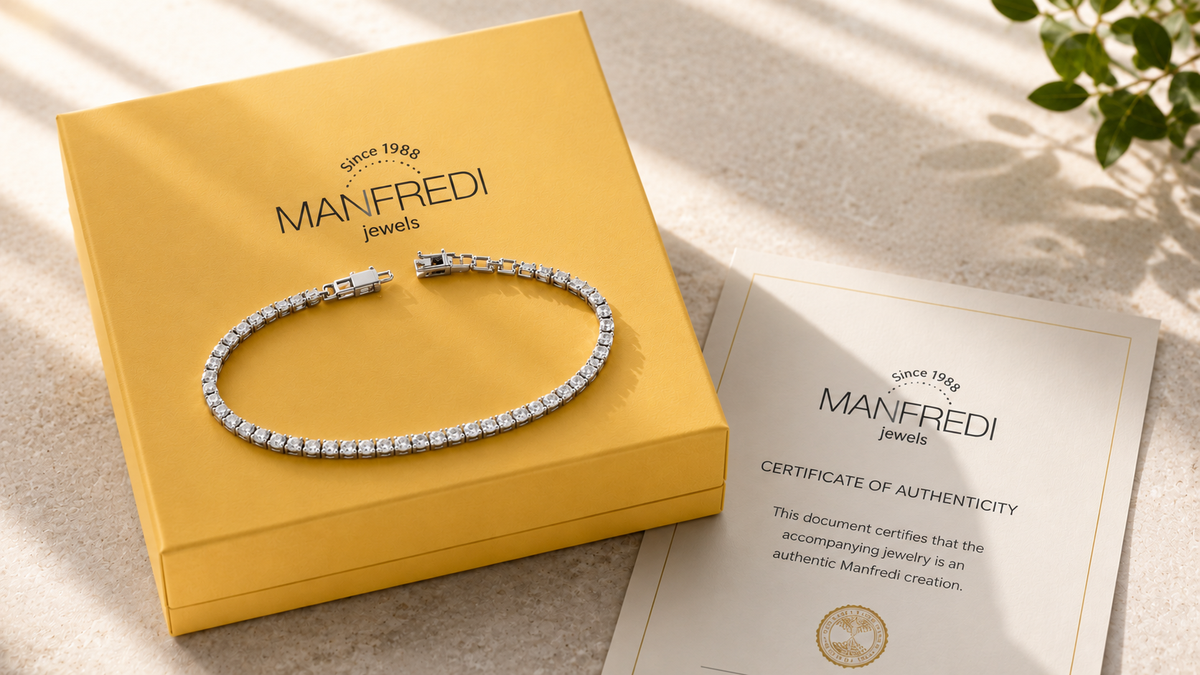
A certificate of authenticity jewelry buyers receive is more than a formality. It is the paper trail that proves a piece is what the seller claims. Reputable designers and retailers provide documentation that accompanies fine jewelry and luxury timepieces, and that paperwork is essential to both value and resale.
Genuine documentation typically includes:
- A certificate of authenticity from the brand or an independent gemological lab
- Grading reports for diamonds and colored gemstones, detailing carat, cut, color, and clarity
- Original receipts and warranty cards tied to the specific piece
- Service records for pre-owned or vintage items
Before you commit to a purchase, request every available document and verify the details against the piece itself. Serial numbers should match, and grading reports should correspond to the exact stones in the setting. When you are ready to confirm a piece independently, Manfredi Jewels offers professional appraisal and authentication services performed by seasoned experts.
Authorized Dealer vs Unauthorized Seller: Where You Buy Matters
Perhaps the single most important factor in buying genuine pieces is choosing the right source. The distinction between an authorized dealer vs unauthorized seller determines whether you receive a legitimate piece backed by the designer, or take on unnecessary risk.
An authorized dealer has a direct relationship with the brand. That means verified inventory, full manufacturer warranties, and access to official documentation. An unauthorized seller, whether a gray-market reseller or an anonymous online listing, offers none of those guarantees.
|
Consideration |
Authorized Dealer |
Unauthorized Seller |
|
Manufacturer warranty |
Included |
Often void |
|
Documentation |
Complete and official |
Incomplete or missing |
|
Product source |
Verified inventory |
Uncertain origin |
|
After-sale service |
Full support |
Limited or none |
|
Peace of mind |
Guaranteed |
At your own risk |
As an authorized retailer for a curated roster of the world's finest jewelry designers and luxury watch brands, Manfredi Jewels gives you the assurance that every piece is genuine. For collectors drawn to rare finds, our carefully vetted estate jewelry collection delivers the same authenticity with the character of history.
How to Verify Designer Jewelry With Confidence
Once you know what to inspect, verifying a piece becomes a straightforward process. Learning how to verify designer jewelry blends your own observation with the expertise of trusted professionals.
Follow these steps before finalizing any significant purchase:
- Examine the hallmarks under magnification to confirm metal purity and maker's marks.
- Inspect the craftsmanship for flawless finishing, secure settings, and clean branding.
- Review all documentation and match serial numbers to certificates and receipts.
- Research the seller to confirm authorized status and reputation.
Seek a professional opinion through a certified fine jewelry appraisal when any doubt remains.
That final step carries real weight. A certified appraisal confirms authenticity, establishes value for insurance, and gives you documented proof of what you own. Manfredi Jewels has earned its reputation across decades of recognition for exactly this kind of trusted, white-glove expertise.
Buying Genuine Designer Jewelry Online and In Person
The path to buying genuine designer jewelry looks different depending on where you shop, and each option has its own considerations. Online shopping offers convenience and selection, while an in-person visit lets you handle a piece and consult an expert face to face.
If you shop online, protect yourself by buying only from authorized retailers, reviewing every image closely, and confirming return policies before you pay. Reputable sellers welcome questions and provide thorough documentation without hesitation.
For high-value purchases, nothing replaces the in-person experience. Holding a piece, seeing it catch the light, and speaking with a knowledgeable specialist gives you a level of certainty that photos cannot. It also opens the door to personalized guidance tailored to your taste and the occasion you are marking.
Shop With Confidence at Manfredi Jewels
Recognizing authentic jewelry from global brands is a skill worth cultivating, and it starts with knowing the hallmarks, the paperwork, and above all, the source. When you buy from a trusted authorized retailer, that uncertainty fades and you are left with the pure pleasure of owning something genuine and lasting.
For more than 30 years, Manfredi Jewels has been a trusted destination for collectors and milestone-seekers alike, offering only authentic pieces from the world's most celebrated designers. Visit us to experience the difference that genuine expertise makes, and connect with our team to find the piece that will be treasured for generations.
Frequently Asked Questions
How can I tell if jewelry from a global brand is authentic?
Start by examining the hallmarks for crisp metal purity and maker's marks, then inspect the craftsmanship for flawless finishing and secure settings. Confirm that complete documentation, including a certificate of authenticity and grading reports, accompanies the piece. When in doubt, seek a professional appraisal from a certified expert.
What are luxury jewelry hallmarks and where do I find them?
Hallmarks are small stamped markings that indicate metal purity, the maker, and sometimes the origin of a piece. You will typically find them discreetly engraved on clasps, ring bands, or settings. Authentic hallmarks are precise and evenly stamped, while blurry or missing marks warrant a closer look.
Is it safe to buy designer jewelry online?
It can be safe when you purchase from an authorized retailer that provides full documentation, clear images, and transparent return policies. Avoid listings with prices that seem too good to be true or sellers who cannot verify authenticity. For high-value pieces, an in-person visit or professional appraisal adds an extra layer of assurance.
What is the difference between an authorized dealer and an unauthorized seller?
An authorized dealer has a direct relationship with the brand, offering verified inventory, full manufacturer warranties, and official documentation. An unauthorized seller, such as a gray-market reseller, cannot guarantee these protections. Buying from an authorized retailer is the most reliable way to ensure you receive a genuine piece.
Why does a certificate of authenticity matter?
A certificate of authenticity proves that a piece is genuine and documents its specifications, which is essential for both value and resale. It also supports insurance appraisals and protects you if a dispute ever arises. Always request and verify all documentation before finalizing a significant purchase.
Should I get a fine jewelry appraisal before buying?
A certified appraisal confirms authenticity, establishes value for insurance, and gives you documented proof of ownership. It is especially wise for high-value or pre-owned pieces where authenticity carries added weight. Professional experts can spot details that are easy to overlook on your own.