

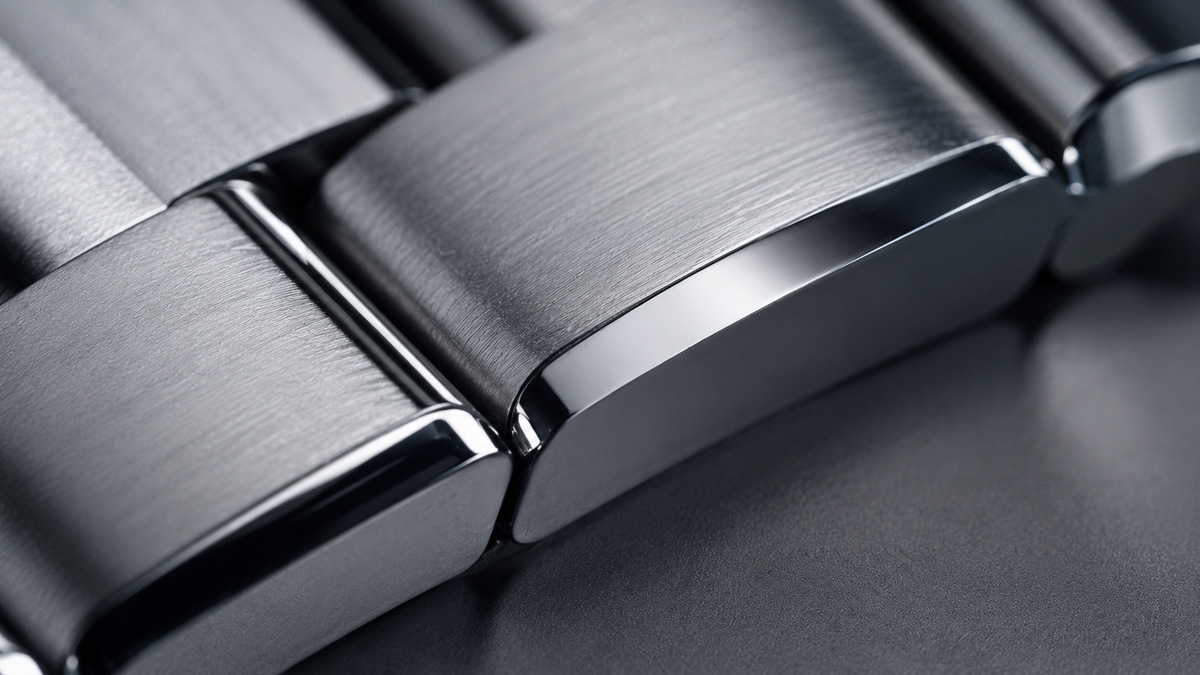
A stainless steel watch strap carries more than the weight of your timepiece. It carries fingerprints from morning espressos, traces of cologne, ocean spray from weekend escapes, and the quiet patina of every day you have worn it. Over time, all of that builds up in the smallest places: between the links, along the clasp, and beneath the case.
There is a difference between rinsing a bracelet and truly cleaning it. The first refreshes the surface. The second restores the finish, protects the precision tolerances, and preserves the value of a watch designed to last generations. That second standard is the work of trained watchmakers and bench jewelers.
In this guide, you will learn how professionals approach cleaning a stainless steel watch strap, the tools and techniques they rely on, why their process protects your investment, and how to recognize when your timepiece is ready for the bench.
Why Professional Cleaning Matters for a Stainless Steel Watch Strap

Stainless steel is celebrated for its strength, its weight, and its quiet elegance on the wrist. But even the finest 904L or 316L steel responds to the world around it. Skin oils, perspiration, lotions, and environmental residue settle into the seams between links, dulling the finish and accelerating wear at pivot points.
A quick wipe at home cannot reach what an ultrasonic bath can. A toothbrush cannot match the precision of a watchmaker's loupe and refinishing tools. Professional cleaning addresses what the eye misses, and it does so without compromising gaskets, seals, or finishes.
For collectors of timepieces from houses like Rolex, Patek Philippe, Vacheron Constantin, and Grand Seiko, this level of care is part of ownership. It protects the bracelet's articulation, the integrity of the case, and the long-term value of the piece.
The Tools Master Watchmakers Use

The difference between a home cleaning and a professional service begins with the tools on the bench. Each one is chosen for precision, control, and respect for the materials involved.
A trained watchmaker typically works with:
- An ultrasonic cleaner with watch-safe solution to lift residue from places no brush can reach
- A pressure tester to verify water resistance before and after service
- Bracelet pin pushers and link tools for full disassembly
- Soft brass and steel brushes calibrated to the finish of each bracelet
- Polishing wheels with grain-specific compounds for brushed and polished surfaces
- A loupe and bench microscope to inspect pivot points, screws, and clasp components
- Lint-free cloths and finishing pads designed for fine timepieces
These are not retail tools. They are professional instruments, used by hands trained over years of bench work. The skill behind them is what separates a cleaned bracelet from a properly restored one.
Inside the Professional Cleaning Process
A proper service is not a single step. It is a sequence of small, deliberate actions performed in order, each one protecting the bracelet from the next.

Step One: Inspection and Documentation
Every piece begins with a thorough inspection. The watchmaker notes the bracelet's finish, the condition of its links, the state of the clasp, and any existing scratches or wear. This documentation protects the client and informs the level of service needed.
Step Two: Disassembly
The bracelet is removed from the case, then the links are separated using the correct pin or screw tools. Full disassembly is what allows every surface, inside and out, to be properly cleaned.
Step Three: Ultrasonic Cleaning
The disassembled bracelet is placed in an ultrasonic bath with a watch-safe solution. High-frequency vibrations lift oils, sweat, dust, and microscopic residue from places a brush cannot reach, including the interior of each link.
Step Four: Brushing and Refinishing
If the bracelet shows signs of dulling or fine scratches, the watchmaker refinishes it by hand. Brushed surfaces are restored along their original grain. Polished surfaces are buffed with grain-appropriate compounds. The goal is always to remove the minimum amount of material necessary to restore factory definition.
Step Five: Rinsing, Drying, and Reassembly
The bracelet is rinsed in clean solution, dried with lint-free cloths, and inspected once more. Each link is reassembled with the correct torque, and worn pins or screws are replaced.
Step Six: Pressure Testing and Final Inspection
If the bracelet was cleaned along with the case, the watch is pressure tested to confirm water resistance. A final inspection under magnification confirms that every surface meets the standard the timepiece was made to.
What At-Home Care Can and Cannot Do
A light wipe between visits is a thoughtful habit. With a soft microfiber cloth, you can remove daily fingerprints and surface dust without risking damage. That is the extent of what home care should cover.
What home care cannot do:
- Restore a brushed finish that has lost its definition
- Remove deep scratches without altering the surface permanently
- Reach the residue trapped inside individual links
- Inspect or replace worn pins, screws, and clasp components
- Verify water resistance before submerging the watch
- Refinish polished surfaces without leaving swirl marks
Common at-home mistakes include using hot water, abrasive sponges, toothpaste as a polish, ammonia or alcohol-based cleaners, and submerging vintage or unverified watches. Each of these can quietly cause damage that only a watchmaker can later correct.
When your bracelet needs more than a wipe, it is time for the bench.
What to Look for in a Trusted Jeweler or Watch Specialist

Not every shop is equipped to service a luxury timepiece properly. The right partner brings experience, the right equipment, and a deep respect for the brands they represent.
When choosing a specialist, look for:
- Master watchmakers trained on the brands you own
- An in-house service center rather than third-party outso
- urcing
- Authorized dealer status with the houses they service
- Transparent inspection and documentation practices
- Ultrasonic, refinishing, and pressure testing capabilities
- A boutique environment that handles your timepiece with discretion
At Manfredi Jewels, our master watchmakers and bench jewelers have served collectors for more than 30 years. As an authorized dealer for many of the houses across our curated watch brands, our service standards reflect what those brands themselves expect. Every timepiece is treated as the heirloom it is, whether it arrived yesterday or has been in a family for decades.
You can learn more about our in-house timepiece and jewelry repair services and the full range of care we offer.
A Final Word on Keeping Your Timepiece at Its Best
A stainless steel watch strap is built to last decades, often longer than the lifetime of its first owner. The way it ages, the way it shines, and the way it articulates on your wrist all reflect the care it has received along the way. Professional cleaning is what keeps that story going.
When your timepiece is ready, the team at Manfredi Jewels is here. Schedule a consultation or visit one of our boutiques to experience the level of care your watch was made for.
Frequently Asked Questions
How often should a stainless steel watch strap be professionally cleaned?
For a daily-worn luxury timepiece, a professional cleaning every 12 to 18 months is a sound rhythm, paired with a full service every three to five years depending on the brand. Pieces worn less often can typically go longer between visits. A trusted jeweler will assess your specific watch and recommend an interval that fits your wear habits.
What does a professional cleaning actually include?
A proper professional cleaning involves inspection, full disassembly of the bracelet, ultrasonic cleaning, refinishing of brushed and polished surfaces as needed, replacement of any worn pins or screws, careful reassembly, and pressure testing if the case is involved. It is a multi-step process performed by a trained watchmaker, not a quick polish.
Can I damage my watch by trying to clean it myself?
Light surface care with a microfiber cloth is safe. Going further at home is where damage tends to happen, whether from hot water, abrasive materials, the wrong cleaning solutions, or brushing across the grain on polished surfaces. Many of the watches that arrive at our bench come in with the marks of well-intentioned home cleaning.
Will professional cleaning affect my watch's value or warranty?
Service performed by an authorized dealer or certified watchmaker preserves both. In many cases, it is required to maintain the manufacturer's warranty and to support strong resale value. Unauthorized refinishing, on the other hand, can permanently diminish a watch's value, particularly on collectible references.
How long does a professional bracelet cleaning take?
A standard bracelet cleaning and refinishing typically takes a few days, depending on the brand, the condition of the piece, and any additional work required. More involved services, such as those that include movement work, can take several weeks. A trusted jeweler will provide a clear timeline before any work begins.
Where can I have my luxury watch professionally cleaned and serviced?
Manfredi Jewels offers full timepiece servicing at our Greenwich and New Canaan boutiques, performed by master watchmakers with decades of experience. Services range from ultrasonic cleaning and bracelet refinishing to full movement servicing and pressure testing. You can reach out anytime to schedule an appointment or learn more about what your watch needs.