

There is a quiet assumption that surrounds quartz watches. Because they run on a battery and a tiny vibrating crystal rather than an intricate web of springs and gears, many owners believe they can wear them for years, replace the battery now and then, and never think about anything else.
The truth is more nuanced. A quartz movement is wonderfully reliable, but the watch wrapped around it still lives in the real world, exposed to moisture, dust, temperature swings, and the gentle wear of daily life. Caring for it properly is what separates a timepiece that fades after a decade from one that becomes a lasting companion.
In the sections below, you will learn whether quartz watches truly need servicing, how often to do it, the warning signs worth watching for, and the simple habits that keep a fine quartz watch running beautifully for generations.
Do Quartz Watches Need Servicing? The Honest Answer

Yes, quartz watches do need servicing, just less frequently and less intensively than their mechanical counterparts. The movement itself has fewer moving parts, which means less internal friction and slower wear. That is the source of the myth that quartz watches are maintenance-free.
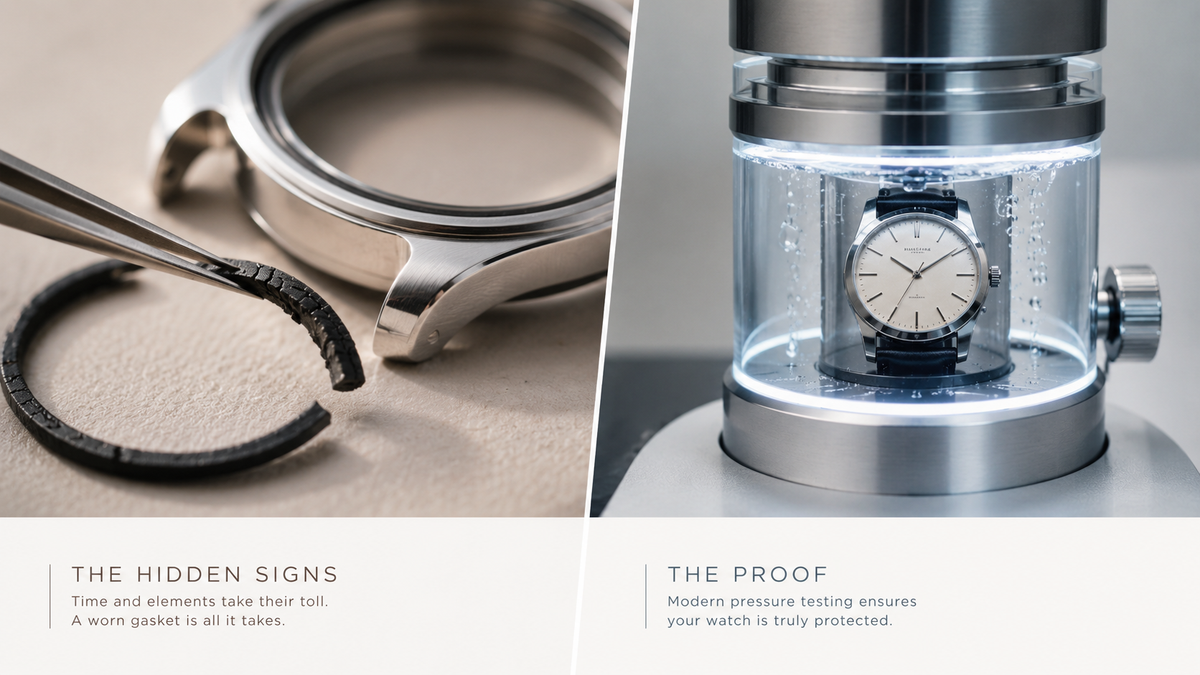
What many owners overlook is everything surrounding the movement. Gaskets dry out and lose their seal. Lubricants on the small moving components, such as the gear train that drives the hands, degrade over time. A battery left in place too long can leak and damage the movement from the inside.
Think of it this way. The engine is efficient, but the rest of the watch still benefits from attention. Routine quartz watch maintenance protects the case, the seals, and the movement so that a small issue never becomes an expensive one.
To understand why quartz care differs from mechanical care, it helps to know how the two movements work. Our guide to the key differences between quartz and automatic watches breaks down what sets them apart and why each asks for a different kind of attention.
How Often to Service a Quartz Watch

There is no single rule that fits every timepiece, because service needs depend on the watch, how it is worn, and the environment it lives in. That said, a few reliable benchmarks help you plan ahead and keep your watch protected.
The table below offers general guidance for how often to service a quartz watch and its components.
|
Service Task |
Typical Interval |
Why It Matters |
|
Battery replacement |
Every 1 to 2 years |
Prevents stoppage and avoids battery leakage that can corrode the movement |
|
Gasket and seal check |
Every 2 to 3 years |
Maintains water resistance and keeps out dust and moisture |
|
Full service (movement clean, reseal, pressure test) |
Every 4 to 5 years |
Refreshes lubrication, restores seals, and preserves long-term reliability |
|
Professional cleaning and polishing |
As needed |
Restores finish and removes buildup that traps grit |
These intervals are general starting points. A water-resistant sports watch worn swimming will need its seals checked more often than a dress watch worn occasionally to dinner. When in doubt, a professional assessment is the safest path.
Quartz Watch Battery Replacement Done Right
Battery replacement sounds simple, and on the surface it is. Yet it is also the moment when an inexpensive watch and a fine timepiece part ways. Opening a case incorrectly, pinching a gasket, or skipping a reseal can compromise the very protection that keeps your watch alive.
When you bring a watch in for quartz watch battery replacement, a proper service involves more than swapping the cell. Here is what thoughtful care looks like:
- Battery removal and replacement using the correct cell type and size for your specific movement
- Gasket inspection to confirm the seals are still supple and intact
- Resealing and pressure testing to restore water resistance after the case has been opened
- Movement check to confirm the hands, date, and functions respond correctly
There is also the matter of timing. A dead battery should never be left sitting inside a watch. Over months, it can leak and cause corrosion that turns a routine fix into a costly quartz watch repair. If your watch stops, it is wise to have the battery replaced sooner rather than later.
Signs Your Quartz Watch Needs Servicing

A quartz watch tends to give quiet signals before a real problem arrives. Learning to read them helps you act early, when a simple service is all that is required.
Watch for these common warning signs:
- The second hand jumps in four-second intervals. Many quartz movements use this as a built-in low-battery warning.
- The watch is running slow or stopping intermittently. This can point to a weak battery or a movement that needs attention.
- Condensation appears under the crystal. Moisture inside the case signals a failed seal and calls for prompt service.
- The hands stop aligning correctly with the date or each other, which may indicate a movement issue.
- The battery drains quickly after a recent replacement, suggesting the movement is drawing more power than it should.
If you notice any of these, it is best to set the watch aside and have it looked at rather than continuing to wear it. Small symptoms are easier and far less expensive to address than the damage they can lead to.
Everyday Habits That Extend the Life of a Quartz Watch
Servicing protects your watch at intervals, but daily care is what truly preserves it between visits. The good news is that quartz watch maintenance at home is simple and takes very little time.
A few mindful habits make a meaningful difference:
- Wipe it down regularly. A soft, dry cloth removes the oils, dust, and residue that build up through the day.
- Keep it away from extremes. Heat, harsh chemicals, and magnets can all affect performance and finish.
- Respect its water rating. Splash resistance is not the same as swim-ready, so know your watch before it meets water.
- Store it thoughtfully. A soft pouch or watch box shields it from scratches and dust when it is not on your wrist.
Strap care matters too, particularly on a metal bracelet that gathers grime in its links. Our guide on how to clean a stainless steel watch strap walks you through it gently and safely. And if you are still deciding how a watch should sit on your wrist, our guide to watch case size and fit is a helpful companion.
Why Professional Quartz Watch Repair Matters

It can be tempting to treat a quartz watch as something you can manage with a kit from a drawer. For a fine timepiece, that temptation is worth resisting. The tools, the sealing process, and the pressure testing that protect your watch are not things most home setups can replicate.
A skilled watchmaker does more than fix what is broken. They preserve value, maintain water resistance, and catch the small issues that an untrained eye would miss. For a watch meant to last a lifetime, that expertise is the difference between a quick patch and genuine care.
At Manfredi Jewels, our master watchmakers bring decades of experience to every quartz watch repair, from battery service to full restoration. Each piece is treated with the precision and respect a fine timepiece deserves.
A Watch Worth Caring For
A quartz watch may ask for less than a mechanical one, but it still rewards the owner who cares for it well. Regular battery service, periodic seal checks, and a few simple daily habits are all it takes to keep your timepiece accurate, protected, and ready to mark the moments that matter.
If your quartz watch is due for attention, we would be glad to help. Schedule a service with our team and let our watchmakers give your timepiece the care it deserves.
Frequently Asked Questions
Do quartz watches need servicing if they keep perfect time?
Yes. Even when a quartz watch is keeping accurate time, the seals, gaskets, and lubricants still age. Periodic servicing protects water resistance and prevents small issues from developing inside the case, so the watch continues running reliably for years to come.
How often should I replace the battery in a quartz watch?
Most quartz watch batteries last between one and two years, though this varies by movement and how many functions the watch runs. It is wise to replace a battery promptly once it dies, since a depleted cell left inside the case can leak and damage the movement.
Can I replace a quartz watch battery myself?
You can, but for a fine timepiece it is not recommended. Opening the case improperly can damage gaskets and compromise water resistance, and resealing requires proper tools and pressure testing. Professional quartz watch battery replacement protects both the movement and the value of your watch.
How long do quartz watches last?
With proper care, a quality quartz watch can last for decades. Routine maintenance, timely battery replacement, and periodic seal checks all extend its life. A well-maintained quartz timepiece can easily become a piece you pass down.
What are the signs that my quartz watch needs repair?
Common signs include the second hand jumping in four-second intervals, the watch running slow or stopping, condensation under the crystal, or a battery that drains quickly after replacement. Any of these is a good reason to have the watch professionally assessed.